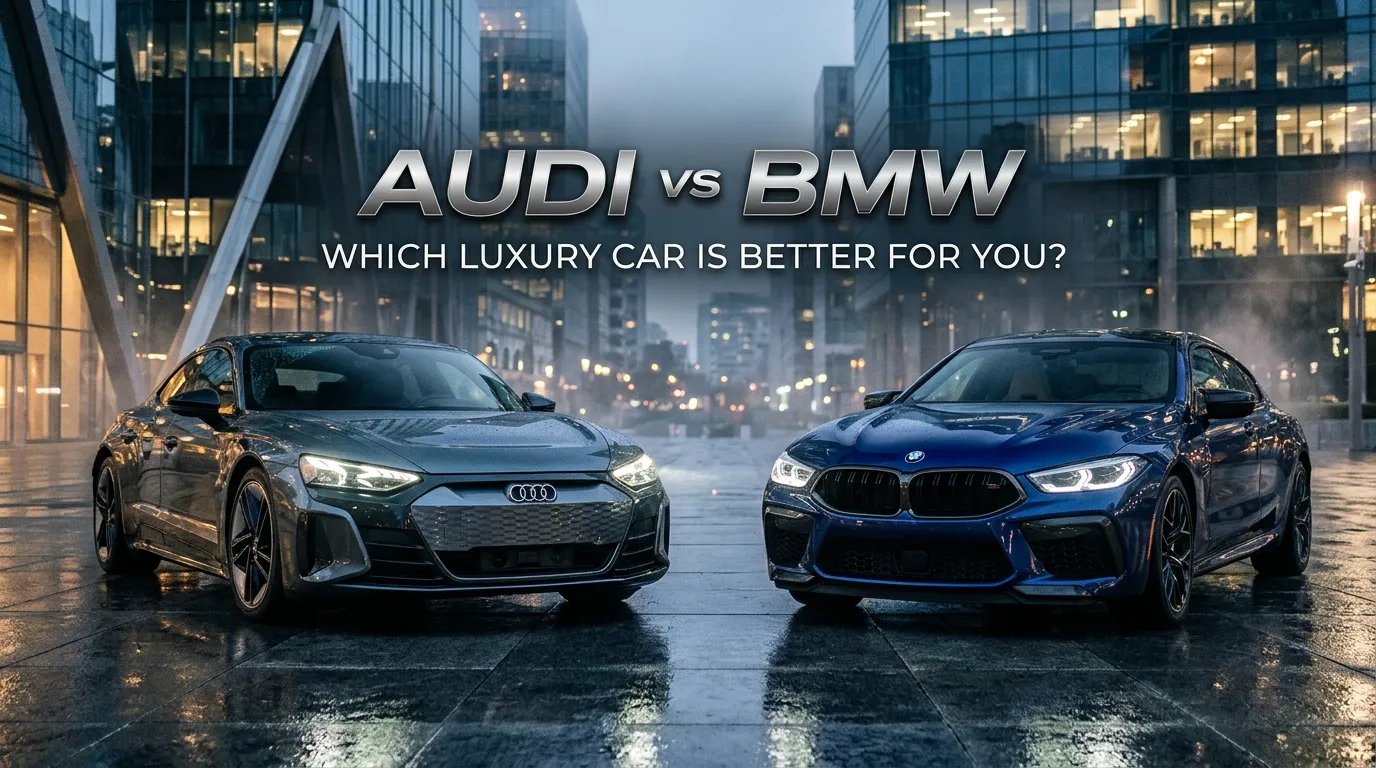
Audi is often known for its clean design and smooth ride, while BMW is known for sporty handling and an exciting drive.
Imagine you want to buy a luxury car. You visit a car showroom and see two popular brands: Audi and BMW. Both look stylish. Both offer comfort, power, and modern features. But which one should you choose?
This is where the question of Audi or BMW comes in. Both brands make cars for people who want more than basic travel. They offer a mix of style, safety, comfort, and performance. Yet, they have different strengths.
Audi is often a good choice for drivers who like a calm cabin, modern design, and available all-wheel drive. BMW may suit drivers who enjoy sharp steering and a sporty feel. However, the best choice depends on the model, price, road conditions, and your needs.
People search for Audi or BMW because they want to compare these brands before buying a car. They may also want to know which one is more reliable, cheaper to maintain, or better for daily use.
There is no single winner for everyone. The right choice depends on how you drive, where you live, and what matters most to you.
Pronunciation
| Word | US pronunciation | UK pronunciation |
| Audi | AW-dee | OW-dee |
| BMW | Bee-em-double-you | Bee-em-double-you |
Pronunciation can vary by speaker. BMW is usually said by naming its three letters.
Audi and BMW are both German car brands, but their driving styles, designs, and model ranges can appeal to different people. Let’s compare them step by step.
Read more about:https://gatherword.com/afterpay-or-klarna/
Difference Between Audi and BMW
Audi and BMW both make premium cars. Yet, they offer different experiences. These ten points can help you compare them.
1. Driving Experience
Audi often focuses on a stable, smooth drive. BMW often focuses on sharp steering and sporty handling. The exact feel depends on the model.
- Example 1: Choose an Audi A6 if you want a calm executive car.
- Example 2: Choose a BMW 3 Series if you enjoy sporty driving.
2. Design and Style
Audi often uses clean lines and a modern look. BMW often has a bold front design and a sporty shape.
- Example 1: An Audi A5 may appeal to someone who likes a simple, sleek design.
- Example 2: A BMW 4 Series may suit someone who wants a more striking look.
3. All-Wheel Drive
Audi offers its well-known quattro all-wheel-drive system on selected models. BMW offers xDrive all-wheel drive on selected models. Both can help improve grip.
- Example 1: An Audi with quattro may suit a driver who faces wet roads.
- Example 2: A BMW with xDrive may help a driver on a slippery road.
Neither system removes all risks. Tyres, speed, and road conditions still matter.
4. Comfort and Interior
Both brands offer comfortable seats, quality materials, and modern cabins. The layout and seat comfort vary by model.
- Example 1: An Audi A8 may suit someone who wants a quiet luxury cabin.
- Example 2: A BMW 5 Series may suit someone who wants comfort with a sporty feel.
5. Technology
Audi offers digital displays, driver aids, and connected features. BMW offers similar features, including its iDrive system. Available features depend on the model and year.
- Example 1: An Audi driver may use the digital cockpit to view driving information.
- Example 2: A BMW driver may use iDrive to manage maps and media.
6. Performance
Both brands sell cars with strong engines and quick acceleration. Their high-performance models serve drivers who want more speed and power.
- Example 1: The Audi RS 3 is a performance-focused compact car.
- Example 2: The BMW M3 is a performance-focused sports sedan.
7. Fuel Economy
Fuel use depends on engine size, vehicle weight, traffic, and driving style. Neither brand is always more fuel-efficient.
- Example 1: A small Audi engine may use less fuel than a large BMW engine.
- Example 2: A BMW hybrid may use less fuel than a larger petrol Audi in suitable conditions.
Compare the exact models before you buy.
8. Maintenance and Repair Costs
Parts and repairs can be costly for both brands. Costs depend on the car’s age, condition, location, and service history.
- Example 1: An older Audi with a hidden engine problem may need expensive repairs.
- Example 2: A used BMW with poor service records may also cost a lot to fix.
9. Price and Value
Both brands sell cars at different prices. The model, trim, engine, and optional features affect the final cost.
- Example 1: A smaller Audi may cost less than a larger BMW.
- Example 2: A well-equipped BMW may cost more than a basic Audi in the same market.
Always compare similar models and total ownership costs.
10. Resale Value
Resale value depends on demand, mileage, condition, service records, and local market trends. Neither brand always wins.
- Example 1: A well-maintained Audi with low mileage may attract buyers.
- Example 2: A popular BMW model with a full service history may also sell well.
Nature and Behaviour of Audi and BMW
Audi: Modern, Calm, and Practical
Audi often appeals to people who want a modern look and a refined drive. Many Audi models offer a neat cabin, digital controls, and available all-wheel drive.
Audi can suit families, professionals, and people who want a luxury car for daily travel. Its larger models may also work well for long trips.
However, not every Audi is soft or calm. The S and RS models can deliver a very sporty drive.
BMW: Sporty, Bold, and Engaging
BMW has a strong image linked to driving enjoyment. Many models offer sharp steering, strong acceleration, and a sporty feel.
BMW can appeal to people who enjoy driving on open roads and want their car to feel responsive. It also makes comfortable family cars and luxury sedans.
However, not every BMW is built for speed. Many models focus on comfort, fuel savings, or everyday use.
Why People Get Confused About Audi and BMW
People often compare Audi and BMW because they share many features.
- Both are German premium car brands.
- Both sell sedans, SUVs, and performance cars.
- Both offer advanced safety and entertainment systems.
- Both have petrol, diesel in some markets, hybrid, or electric options across their ranges.
- Both can have high repair and maintenance costs.
The confusion grows when people compare two cars with different prices or engine sizes. A small Audi should not be judged against a much larger BMW without considering the difference.
The best comparison matches cars in the same class, such as an Audi A4 and a BMW 3 Series, or an Audi Q5 and a BMW X3.
Comparison Table
| Feature | Audi | BMW |
| Home country | Germany | Germany |
| Brand image | Modern and refined | Sporty and engaging |
| Driving feel | Often stable and composed | Often sharp and responsive |
| All-wheel drive | quattro on selected models | xDrive on selected models |
| Interior | Clean, modern layouts | Driver-focused, modern layouts |
| Performance | S and RS models | M Performance and M models |
| SUVs | Q series | X series |
| Electric models | e-tron range | i range |
| Maintenance | Can be expensive | Can be expensive |
| Best choice | Depends on your needs | Depends on your needs |
Both brands offer luxury, technology, and performance. The main difference is the experience you prefer, not a simple rule that one brand is better in every area.
The Origin of Audi and BMW
The History of Audi
Audi’s roots go back to 1899, when August Horch founded an automobile company in Germany. In 1909, he started a new company. The name Audi came from the Latin form of his surname, Horch, which means “listen” in German.
In 1932, Audi joined DKW, Horch, and Wanderer to form Auto Union. The four linked rings represent these four companies. Audi later became known for its engineering, modern design, and quattro all-wheel-drive technology.
The History of BMW
BMW’s roots date to 1916, when an aircraft-related company in Bavaria became the basis of its history. The name BMW stands for Bayerische Motoren Werke, or Bavarian Motor Works.
BMW began making motorcycles in the early 1920s and entered car production in 1928–1929. Over time, it became known for premium cars, sporty sedans, powerful engines, and performance models.
Both brands have grown from German engineering traditions into global names. Their long histories help explain why they remain strong rivals today.
British vs American English
Audi and BMW are brand names, so their spelling does not change between British and American English. However, people in different countries may use different terms when discussing their cars.
| Topic | British English | American English |
| Spelling | Audi, BMW | Audi, BMW |
| Petrol / Gas | Petrol | Gas or gasoline |
| Boot / Trunk | Boot | Trunk |
| Bonnet / Hood | Bonnet | Hood |
| Tyres / Tires | Tyres | Tires |
| Gearbox / Transmission | Gearbox | Transmission is common |
| Car park / Parking lot | Car park | Parking lot |
Examples:
- British English: “My Audi needs new tyres.”
- American English: “My BMW needs new tires.”
- British English: “I left my bag in the boot.”
- American English: “I left my bag in the trunk.”
The brand names stay the same. Only some words around them change.
Which One Should You Use?
You do not need to choose between the names based on your country. Audi and BMW are both correct brand names worldwide.
- For US buyers: Compare local prices, insurance, fuel costs, repair services, and available models.
- For UK buyers: Check road tax, insurance groups, fuel economy, service costs, and used-car history.
- For global buyers: Compare the exact model, engine, warranty, safety features, and local parts supply.
If you prefer a smooth, modern feel, start by testing an Audi. If you enjoy sharp steering and sporty handling, start with a BMW.
For buyers in Pakistan, also check ground clearance, parts availability, workshop skills, fuel quality requirements, and the cost of imported parts. A well-maintained car with a clear service history is often a better choice than a more expensive car in poor condition.
Common Mistakes
People often make these mistakes when comparing Audi and BMW.
1. Mistake: Audi is always more comfortable.
Correction: Comfort depends on the model, seats, suspension, and tyres.
2. Mistake: BMW is always faster.
Correction: Compare engine power and acceleration for the exact models.
3. Mistake: Audi quattro means the car cannot skid.
Correction: All-wheel drive can improve grip, but it cannot prevent every skid.
4. Mistake: BMW cars always cost more to maintain.
Correction: Repair costs vary by model, age, and location.
5. Mistake: Every Audi has quattro.
Correction: Some models have front-wheel drive or other drive layouts.
6. Mistake: Every BMW is a sports car.
Correction: BMW also makes family cars, SUVs, and electric vehicles.
7. Mistake: A famous brand always means a reliable car.
Correction: Check the specific model’s reliability record and service history.
8. Mistake: The more expensive car is always better.
Correction: Choose the car that fits your budget and daily needs.
Everyday Usage Examples
Here are natural ways to use Audi and BMW in daily communication.
In Emails
Example 1: Asking for a car comparison
“Dear Sales Team,
Could you please compare the Audi A4 and BMW 3 Series? I would like details about price, fuel use, warranty, and service costs.
Thank you.”
Example 2: Asking about a used car
“Hello, I am interested in your used BMW. Could you share its service history, mileage, and repair records?”
On Social Media
- “Audi or BMW—which one would you choose for daily driving?”
- “I love the look of this new BMW!”
- “The Audi interior looks clean and modern.”
In News Writing
- “Audi has expanded its electric vehicle range.”
- “BMW has introduced new technology in its latest models.”
These statements should be checked against current news before publication.
In Formal Writing
- “This report compares the cost of owning an Audi and a BMW.”
- “The final choice depends on purchase price, running costs, and driver needs.”
These examples show that both names work naturally in casual and formal English.
Usage Trends
Audi and BMW are well-known car brands in many parts of the world. People search for them when buying a new car, choosing a used vehicle, or comparing luxury brands.
Search interest may rise when a company launches a new model, announces an electric vehicle, or receives attention for a new technology. Local car prices and fuel costs can also affect what buyers search for.
The phrase “Audi or BMW” often shows that a person is comparing two options. Searches may include questions about reliability, comfort, speed, price, and resale value.
There is no single global winner for search interest or buyer preference. Results can change by country, time period, and model range. Tools such as Google Trends can help compare search interest over a chosen period and location.
Remember that search interest is not the same as sales. A popular search term does not prove that one brand sells more cars.
Metaphors and Similes
Audi and BMW are car brands, so they do not have fixed metaphorical meanings in everyday English. Still, writers can use them in comparisons to describe style or performance.
Metaphors
– “The Audi is a quiet office on wheels.”
This suggests a calm and refined cabin.
– “The BMW is a sports shoe on wheels.”
This suggests quick movement and sporty handling.
– “That Audi is a rolling piece of art.”
This highlights its design.
Similes
– “The BMW moved like an athlete on the road.”
This suggests quick and controlled movement.
– “The Audi’s cabin felt as calm as a library.”
This suggests a quiet interior.
These are creative descriptions, not official claims about either brand.
Connotative Meaning
A word’s connotation is the feeling or idea it brings to mind. The names Audi and BMW can create different impressions, depending on the speaker.
Positive Meaning
Audi: Modern design, comfort, technology, and refinement.
Example: “Her Audi gives her a smooth and stylish ride.”
BMW: Driving enjoyment, performance, confidence, and sporty design.
Example: “His BMW makes every weekend drive feel exciting.”
Negative Meaning
Some people connect luxury cars with high costs, expensive repairs, or showing off. These are opinions, not facts about every owner.
- “He worries that his Audi will cost too much to repair.”
- “She thinks the BMW is too expensive for her budget.”
Neutral Meaning
Both names can simply identify a vehicle.
- “The Audi is parked outside.”
- “The BMW needs a routine service.”
The meaning depends on the context. Neither brand name is naturally good or bad.
Idioms and Proverbs
There are no widely established English idioms or proverbs that specifically use the names Audi or BMW. However, common driving expressions can help you write about them.
1. In the Driver’s Seat
Meaning: To be in control.
Example: “When comparing Audi and BMW, the buyer should stay in the driver’s seat and make the final choice.”
2. Get the Ball Rolling
Meaning: To start something.
Example: “I will compare the Audi and BMW prices today to get the ball rolling.”
3. The Proof Is in the Pudding
Meaning: Results show whether something is good.
Example: “Both cars look impressive, but the proof is in the pudding when you test-drive them.”
4. Don’t Judge a Book by Its Cover
Meaning: Do not judge something by its appearance alone.
Example: “Do not choose an Audi or BMW only because it looks beautiful. Check its condition first.”
These expressions are useful in reviews, discussions, and buying guides.
Literature and Movies
Audi and BMW are real car brands, not words with separate meanings in literature. However, writers and filmmakers often use luxury cars to show wealth, power, speed, or social status.
Literature
Car brands can appear in fiction, crime stories, thrillers, and modern novels. A luxury car may help readers picture a character’s lifestyle.
For example, a writer might describe a character arriving in a black BMW to suggest success or confidence. Another character might drive an Audi to reflect a taste for modern design.
These are possible writing choices, not fixed meanings.
Movies

Mission: Impossible – Ghost Protocol (2011)
United States
This action film features Audi cars. The vehicles help create a modern, high-tech look that fits the film’s fast-moving scenes.
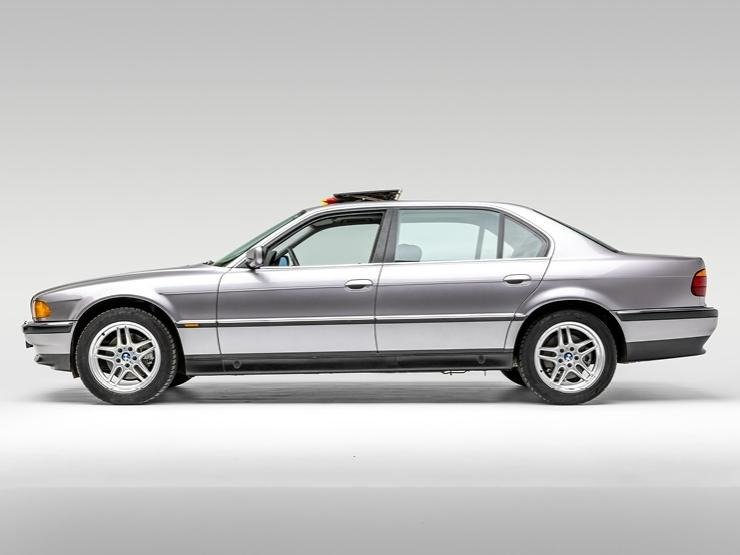
Tomorrow Never Dies (1997)
United Kingdom / United States
The film features a BMW 750iL. Its technology and action scenes helped make the car memorable to movie fans.
Films can influence how people see these brands. Still, a car that looks exciting on screen may not be the best choice for everyday use.
Why This Difference Matters
Understanding Audi and BMW helps buyers make better choices. It also helps English learners understand car reviews, advertisements, and everyday conversations.
For buyers, the comparison can help with:
- Choosing a car that suits their needs.
- Comparing prices and running costs.
- Understanding different driving styles.
- Avoiding choices based only on brand image.
- Checking comfort, safety, and repair needs.
For English learners, this topic teaches useful words such as luxury, reliable, sporty, efficient, and maintenance. It also shows how to compare two things in clear English.
For society, informed buying can help people spend money wisely. It can also reduce the pressure to buy an expensive product just to impress others.
The key lesson is simple: compare the facts, not just the badges.
Usefulness in Daily Life
The Audi or BMW comparison can help in several everyday situations.
- Buying a car: Compare the price, condition, and features.
- Planning a budget: Include fuel, insurance, servicing, and repairs.
- Driving with family: Check seat space, comfort, and safety features.
- Travelling long distances: Consider seat comfort, fuel use, and road conditions.
- Buying a used car: Check service records, accident history, and inspection results.
- Learning English: Use the comparison to practise questions, opinions, and descriptive words.
- Writing a review: Explain the strengths and weaknesses of each model.
For example, a family may prefer an SUV with enough room for children and luggage. A single driver may prefer a smaller sedan that is easier to park.
The best choice is the one that meets your real needs and fits your budget.
Situational Preference
The better choice depends on the situation. For a comfortable daily commute, compare models such as the Audi A4 and BMW 3 Series by seat comfort, ride quality, fuel use, and price. For a family SUV, compare the Audi Q5 and BMW X3. If you enjoy sporty handling, a suitable BMW may appeal to you. If you prefer Audi’s design and available quattro system, an Audi may be a better fit. In Pakistan, check ground clearance, parts supply, mechanic skills, and repair costs before buying. For a used car, a professional inspection and full service history matter more than the badge alone.
Possible asked questions
1. Which is better, Audi or BMW?
Neither is always better. Audi may suit drivers who prefer a refined feel, while BMW may appeal to those who enjoy sporty handling. Compare the exact models.
2. Is Audi more reliable than BMW?
Reliability varies by model, engine, and year. Check reliable model-specific data and service records before buying. Do not assume that every car from one brand is better.
3. Which is cheaper to maintain, Audi or BMW?
Costs vary by vehicle, location, and repair needs. Both can be expensive to maintain. Get local service estimates for the exact models.
4. Is Audi more comfortable than BMW?
Not always. Both brands offer comfortable cars. Seat design, suspension, wheel size, and trim level can change the driving experience.
5. Which is faster, Audi or BMW?
It depends on the models and engines. Compare official acceleration figures, power, and top speed rather than the brand names alone.
6. Which is better for daily driving?
Both can work well. Choose based on comfort, fuel costs, parking needs, traffic, and local repair support.
7. Which is better in Pakistan, Audi or BMW?
Either can be a good choice if the model is suitable and well maintained. Check spare parts, qualified mechanics, fuel requirements, ground clearance, and the total cost of ownership.
Conclusion
Audi and BMW are two leading German luxury car brands. Both offer stylish designs, modern technology, strong performance, and comfortable interiors. However, each brand has its own appeal.
Audi is often linked with clean design, a refined cabin, and available quattro all-wheel drive. BMW is often linked with sporty handling, responsive steering, and an engaging driving experience. These are general differences, and the exact model can change the result.
When choosing between Audi or BMW, do not focus only on the brand name. Compare cars in the same class. Check their prices, fuel use, safety features, maintenance needs, and resale value. If you are buying a used car, review its service history and arrange a professional inspection.
For buyers in the US, UK, Pakistan, or any other country, local costs and service support also matter. A car that suits one driver may not suit another.
The final answer is simple: choose Audi if its comfort, design, and features suit you best. Choose BMW if its driving feel and features match your needs. Test-drive both when possible, compare the real costs, and choose the car that fits your life.